
Tag: residual stress
-

Legacy Post: Residual Stress in Additive Manufacturing (Feb 2018)
In previous blog posts we have discussed various issues related to residual stress in welding. Here, we’ll follow up with a more detailed look at residual stress in additive manufactured parts, which is a form of welding. Additive manufacturing processes, including powder and wire-fed E-beam and laser, produce residual stress as an undesired consequence. Residual…
-
Legacy Post: Compressive Residual Stress (Nov 2017
We recently answered the question: What is residual stress? As a follow-up for all of our interested readers, today we are addressing the topic of compressive residual stress. Once you understand the concept of residual stress, which is stress that is locked in a material during manufacturing, it is important to distinguish between compressive residual…
-
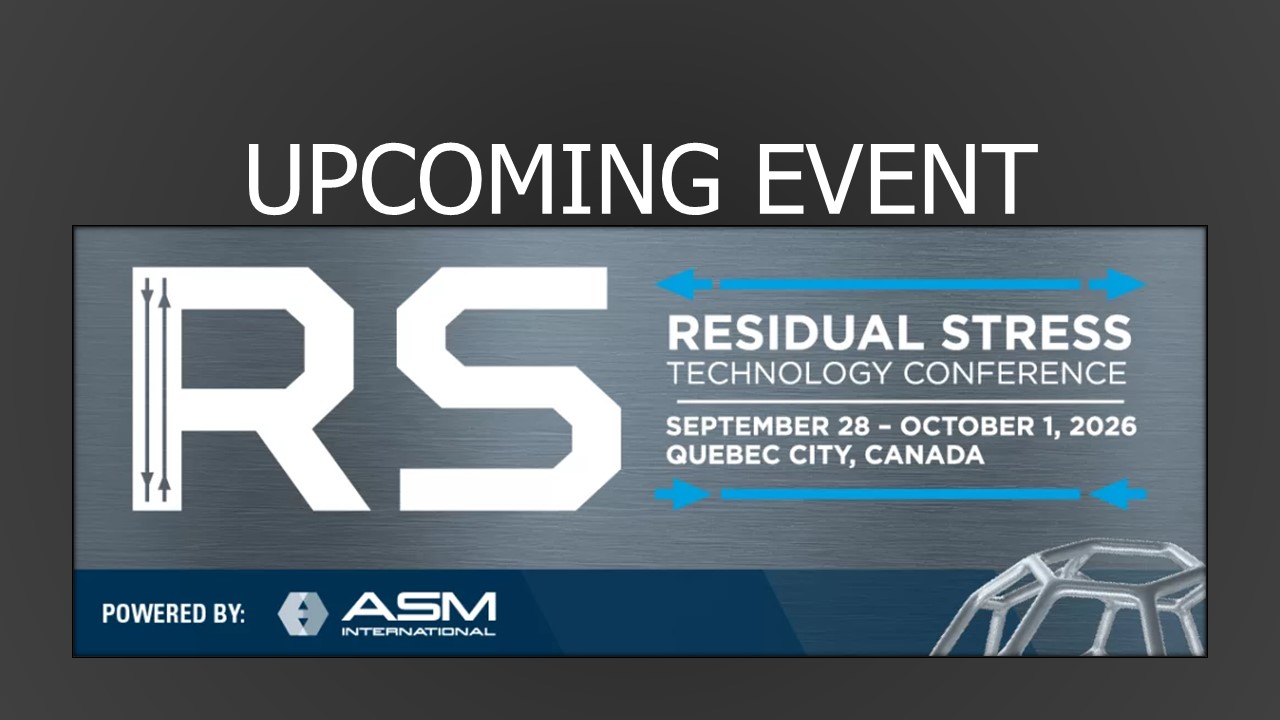
Hill Engineering Looks Ahead to Residual Stress Technology Conference 2026 in Quebec City
Hill Engineering is looking forward to the Residual Stress Technology Conference 2026, taking place September 28 through October 1 in Quebec City, Canada. This dynamic event brings together engineers, researchers, and industry leaders to explore the latest advances in residual stress science and their impact on material performance. RSTC 2026 marks an important evolution in…
-
Legacy Post: Residual Stress Calculation (July 2017)
In a recent blog post we discussed the question: what is residual stress. As a follow-up, today we are addressing the topic of residual stress calculation. Once you understand the concept of residual stress and are ready to account for its effect on material performance it’s important to quantify the residual stress that is present…
-

Contour Method Chapter Featured in ASM Handbook Volume 25A
ASM Handbooks has published a new chapter in Residual Stress Fundamentals, Volume 25A: The Contour Method for 2D Residual Stress Mapping. Authored by Michael Prime and Hill Engineering’s own Adrian DeWald, the chapter delivers an in-depth exploration of one of our most powerful and popular residual stress measurement techniques. Below is the abstract text: This…
-
Legacy Post: Hill Engineering opens Utah Office (Jun 2017)
Hill Engineering, LLC, answering strong demand for its aircraft structural integrity, fatigue analysis and design, and residual stress engineering services, has opened a satellite office in Layton, UT. This new office will allow Hill Engineering to better connect and collaborate with our customers and partners in the local area and the broader aerospace community. Our…
-

Effects of Welded Pipe Trimming on Residual Stress Measurements: a new case study
Hill Engineering has published a new technical case study, Effects of Trimming on Welded Pipe Residual Stress Measurements, exploring how sectioning on a welded pipe influences the residual stress state within the weld region and what that means for accurate measurement planning. Residual stress from welding plays a critical role in structural performance, combining with…
-
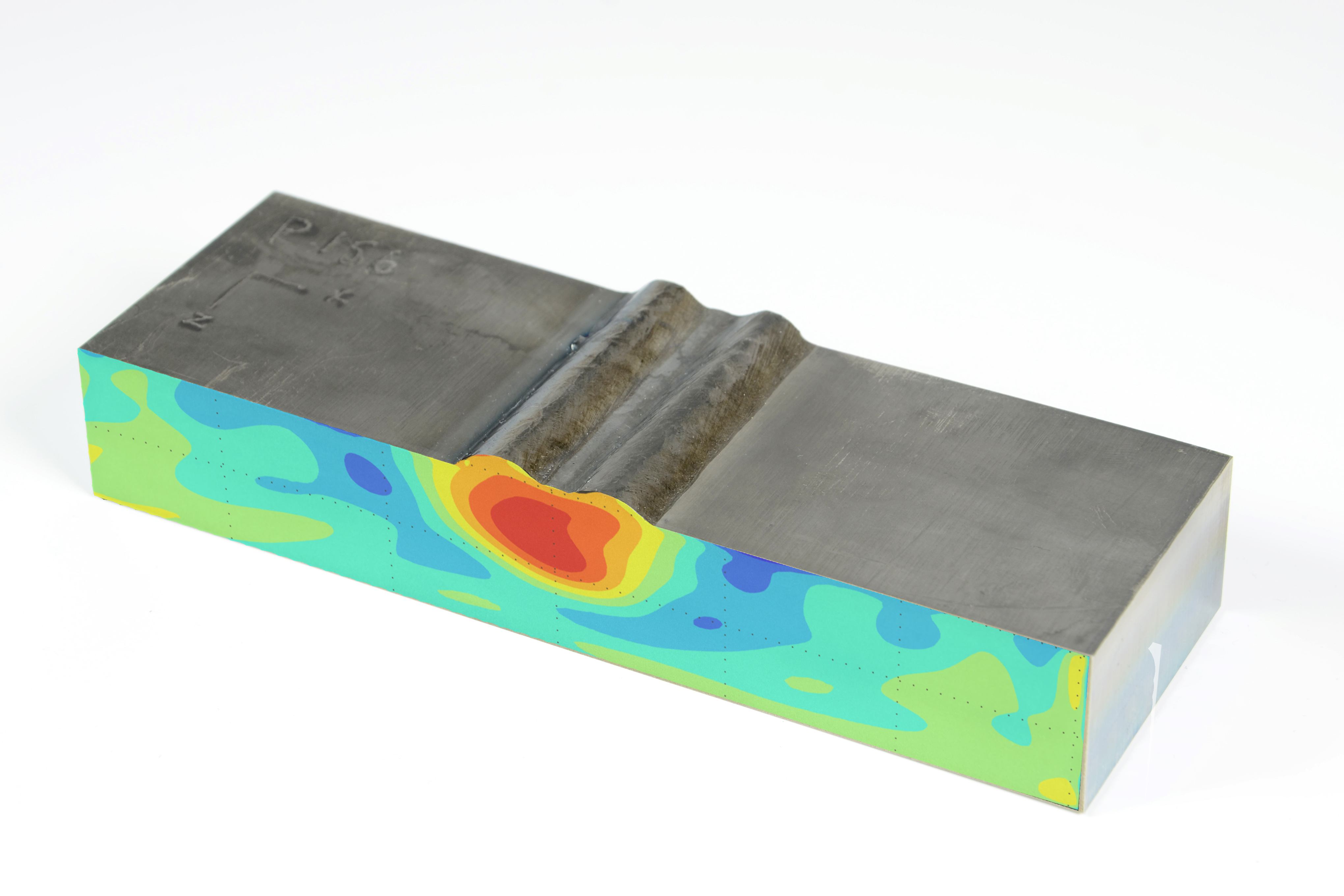
ExpressRS® handout
If you’ve been looking for an overview of our expedited residual stress measurements through our ExpressRS® service, look no further. Our new brochure highlights the many ways that ExpressRS® can help you reach your project’s goals. When choosing ExpressRS®, your measurements are given priority in our laboratory, making it possible to meet your deadline sooner.…
-
Legacy Post: Hill Engineering’s Internship Program (Aug 2016)
Every summer, Hill Engineering hires university students as interns; aiming to give them insight into industry jobs and provide them with the experience they’ll need to develop their careers post-graduation. We pride ourselves on involving interns in projects which utilize and further explore the concepts they have learned in school. In the past, we’ve had…
-

Hill Engineering Awarded Canadian Patent for DART Residual Stress Technology
Hill Engineering is proud to announce that we have been awarded Canadian Patent No. 3080749, titled Analysis to Enable Stress Relief in Material Under Stress, for our DART™ near-surface residual stress measurement device. Residual stress analysis has traditionally been limited to static, laboratory-based environments, where controlled conditions allow for precise measurements. However, performing accurate and…