
Even on vacation, it’s hard to pass up a visit to a science museum. Earlier this year, I had the chance to visit the Science and Industry Museum in Manchester, England, one of the world’s first industrial cities. Cotton was the commodity that helped this city grow in the early 19th century, giving rise to powered machines and multi-story mills that produced cloth that was sold all over the globe.
A large portion of the museum is devoted to the Textile Gallery, which brings visitors through the early days of Manchester and shows how the textile industry shaped the city. We were able to see a demonstration of some of the large machines on display in action, such as a roving frame, where knowledgeable museum staff talked about what it was like to work in one of these large cotton mills. The large warehouse space holds quite the collection including machines used to process the raw cotton, ones that spun it into thread, and others that wove it into large bolts of fabric.

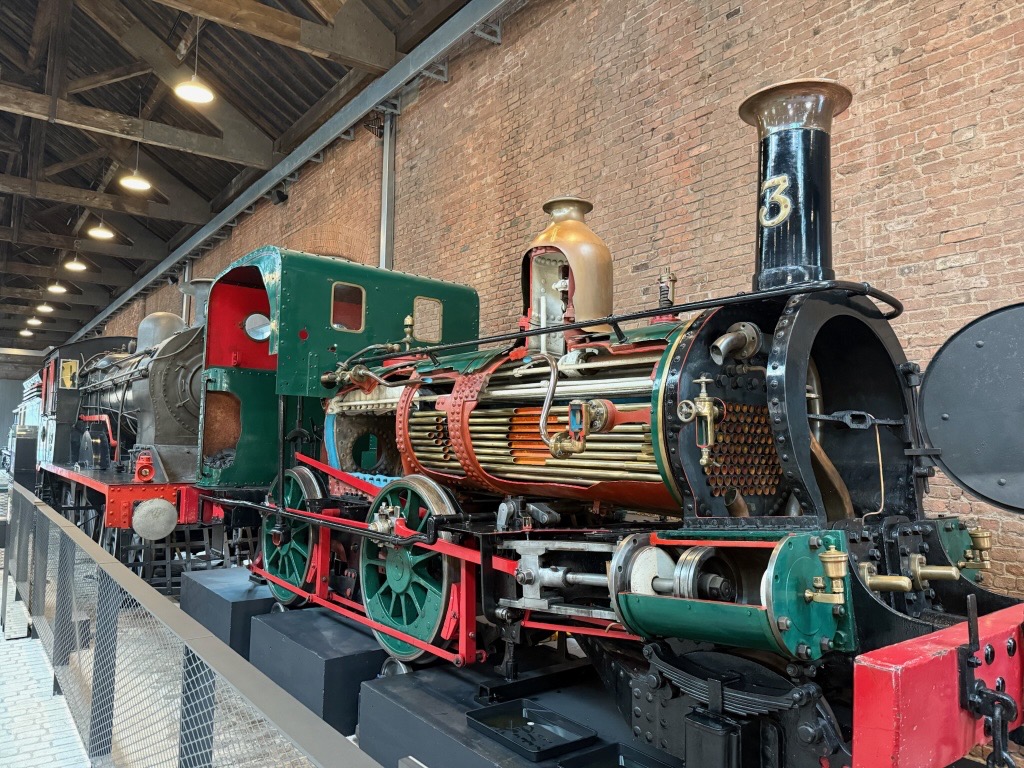
Moving on to Power Hall: The Andrew Law Gallery, museum goers can see one of the United Kingdom’s largest collections of historic engines from the 19th and 20th centuries. Many of the engines on display were operational, using 21st century carbon-neutral infrastructure instead of their original fuel sources. Highlights in this gallery included a steam locomotive from 1873, named ‘Pender’, that had a section cut out of its side, so the inner pipes and pistons were visible. This locomotive, made by Beyer, Peacock & Co. Ltd, was ordered for the Isle of Man Railway, which was opened to promote commerce and the tourist trade.

It was quite the eye-opening experience to see so many different machines made hundreds of years ago. It’ll be even more interesting to see what they add to the collection next.
Leave a Reply