
Author: atdewald
-

Legacy Post: Compressive Residual Stress (Nov 2017
We recently answered the question: What is residual stress? As a follow-up for all of our interested readers, today we are addressing the topic of compressive residual stress. Once you understand the concept of residual stress, which is stress that is locked in a material during manufacturing, it is important to distinguish between compressive residual…
-
Legacy Post: SEM Annual Conference and Exposition on Experimental and Applied Mechanics (June 2017)
Hill Engineering will be presenting at the upcoming Annual 2017 Conference and Exposition on Experimental and Applied Mechanics, which is organized by the Society of Experimental Mechanics (SEM). The conference will run from June 12, 2017 through June 15, 2017 and will be located in Indianapolis, IN. We invite you to come see us. We…
-

Legacy Post: Lincoln Award (July 2017)
The Lincoln Award is named in honor of Dr. John W. (Jack) Lincoln, the U.S. Air Force’s first Technical Advisor for Aircraft Structural Integrity. An internationally recognized expert in structural integrity, fatigue analysis, and aviation safety, Dr. Lincoln is credited with developing the Aircraft Structural Integrity Program (ASIP) that is now institutionalized throughout the Air…
-
Legacy Post: Residual Stress Calculation (July 2017)
In a recent blog post we discussed the question: what is residual stress. As a follow-up, today we are addressing the topic of residual stress calculation. Once you understand the concept of residual stress and are ready to account for its effect on material performance it’s important to quantify the residual stress that is present…
-

Legacy Post: Hill Engineering opens Utah Office (Jun 2017)
Hill Engineering, LLC, answering strong demand for its aircraft structural integrity, fatigue analysis and design, and residual stress engineering services, has opened a satellite office in Layton, UT. This new office will allow Hill Engineering to better connect and collaborate with our customers and partners in the local area and the broader aerospace community. Our…
-
Legacy Post: 2016 Highlights at Hill Engineering (Jan 2017)
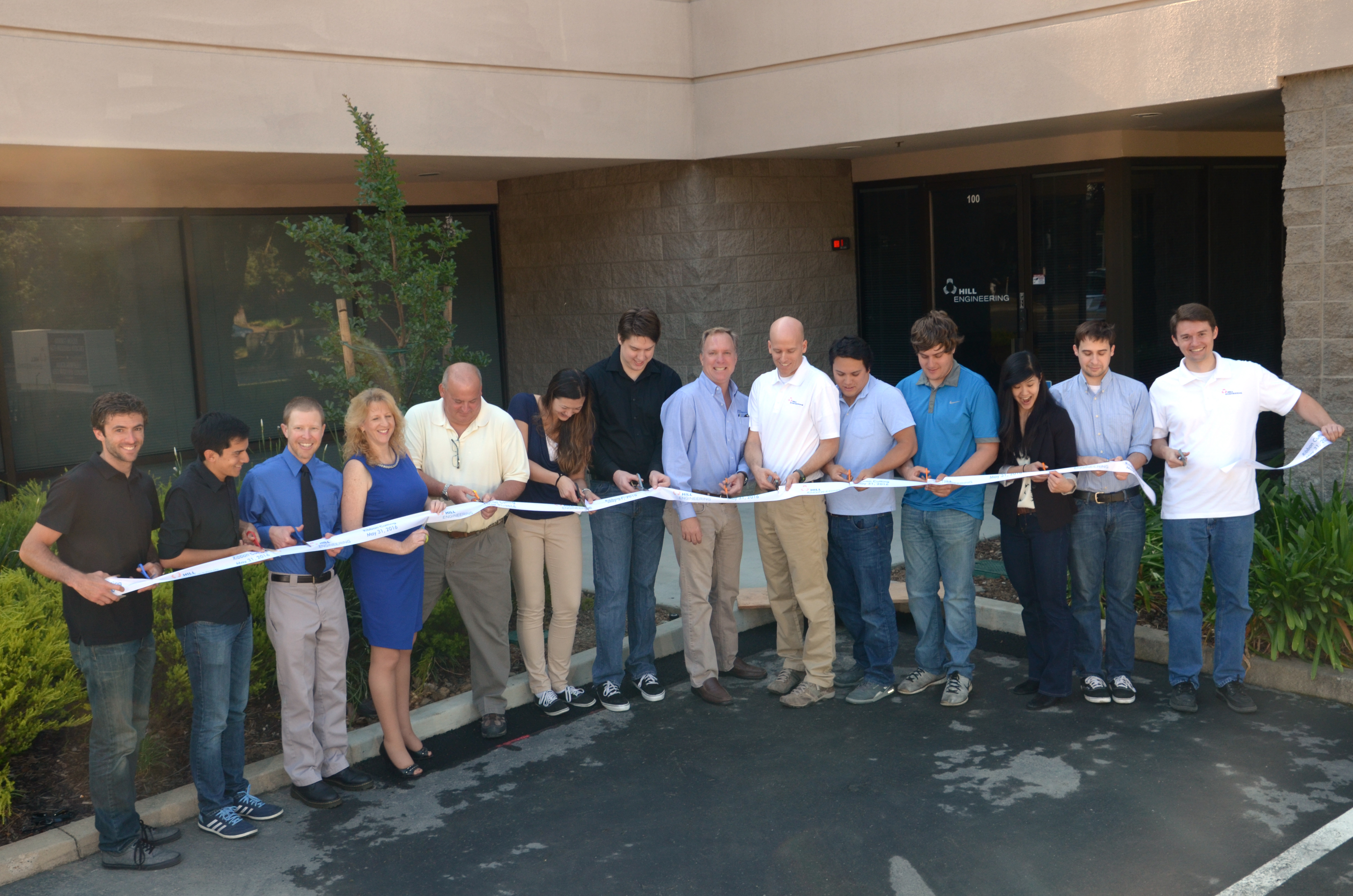
2016 was an exciting year at Hill Engineering. We accomplished so much and we wanted to take a moment to recognize some of the highlights. Early in the year, we were in the middle of Hill Engineering’s largest ever facilities planning/construction project. We had just selected our new office location and needed to plan and…
-
Legacy Post: Come See Us at PS&S 2017 (May 2017)
Hill Engineering will be presenting at the upcoming Propulsion Safety & Sustainment Conference (PS&S) in Phoenix, AZ on May 22nd through May 25th. We invite you to come see us. We will be sharing some recent work about experimental validation of process models for nickel engine disk design. Hill Engineering’s presentation will include a summary…
-
Legacy Post: Aircraft Airworthiness & Sustainment 2017 (May 2017)
Hill Engineering is presenting about residual stress engineering to support fleet management and life extensions of legacy fleets at the upcoming 2017 Aircraft Airworthiness & Sustainment Conference (AA&S) in Phoenix, AZ. The mission of this conference is to identify the challenges and the collaborative work being done within the aerospace community in improving the safety,…
-
Legacy Post: Welcome Josh Hodges (Apr 2017)
We would like to welcome Josh Hodges to Hill Engineering. Josh has worked in the United States Air Force T-38 ASIP office (Hill Air Force Base) for the past 8+ years as a Structural Integrity Analyst. During his time in the T-38 ASIP office, Josh filled many roles including: developer of the Broad Application for…
-
Legacy Post: Understanding Fatigue Analysis for Structural Durability (Apr 2017)
Fatigue is a material failure mechanism whereby repeated sub-critical loads nucleate and grow cracks that can ultimately lead to failure of a structure. Hill Engineering routinely performs fatigue analysis to quantify and predict fatigue performance of materials. State-of-the-art fatigue analysis is subdivided into categories, including durability (crack initiation) or damage tolerance (crack growth). The appropriate…